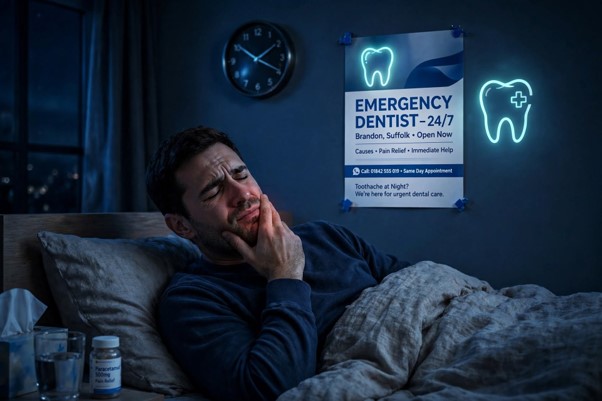
A toothache can feel much worse at night, especially when it interrupts your sleep or causes persistent throbbing. While mild discomfort may sometimes settle temporarily, severe or ongoing tooth pain can indicate a problem that needs prompt dental attention.
Understanding why toothache occurs, which symptoms to look out for and when to seek help can help you make an informed decision about your dental health. If you are experiencing severe toothache in Brandon, Suffolk, knowing when to contact an emergency dentist is particularly important.
Why Does Toothache Become Unbearable at Night?
Toothache may seem more intense at night for several reasons. When you lie down, changes in blood flow and pressure may contribute to the sensation of throbbing pain. You may also notice the discomfort more because there are fewer distractions than during the day.
Common causes of nighttime toothache include:
- Tooth decay: Cavities can expose sensitive inner tooth structures and cause pain when eating or drinking.
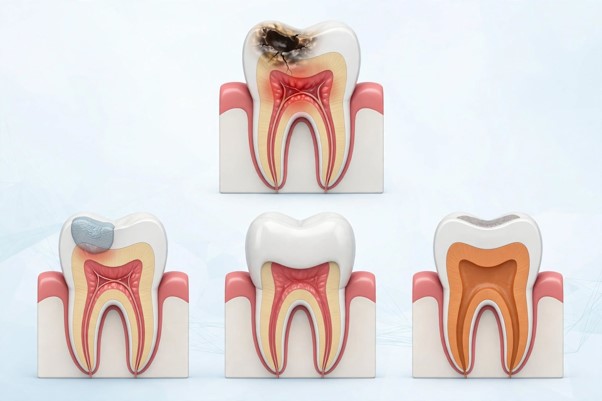
- Inflamed dental pulp: The pulp contains nerves and blood vessels. Inflammation can cause persistent or intense pain.
- Cracked or damaged teeth: A crack may cause sharp pain when biting or releasing pressure.
- Dental abscess: An infection around the tooth root or gums can cause throbbing pain, tenderness and swelling.
- Gum disease: Inflamed gums or an infection around a tooth can also cause discomfort.
Although pain relief may help you rest, it does not necessarily address the underlying cause.
How to Recognise Irreversible Pulpitis or a Dental Abscess
Two conditions that can cause significant toothache are irreversible pulpitis and a dental abscess. Both require professional dental assessment.
Irreversible pulpitis occurs when inflammation inside the tooth becomes severe enough that the pulp cannot recover on its own. Possible symptoms include spontaneous pain, pain that wakes you at night, and sensitivity to hot or cold temperatures that lingers after the trigger is removed. The pain may be difficult to locate or may continue without an obvious trigger.
A dental abscess is a collection of pus caused by an infection. Symptoms may include persistent throbbing pain, swelling around the tooth or face, pain when biting, a bad taste in the mouth, fever or swollen glands.
These symptoms can overlap with other dental conditions, so they cannot confirm a diagnosis by themselves. Even if the pain suddenly disappears, the problem may not have resolved. An infected tooth sometimes stops hurting when the pulp dies, while the infection can continue to develop.
What Can You Do for Toothache at Night?
If you cannot see a dentist immediately, a few measures may help manage discomfort temporarily:
- Take an over-the-counter pain reliever according to its packaging instructions, if it is safe for you. Ask a pharmacist if you are unsure.
- Rinse your mouth gently with warm salt water and spit it out.
- Apply a cold compress to the outside of your cheek if there is swelling.
- Keep your head slightly elevated when resting.
- Avoid very hot, cold or sugary foods if they trigger pain.
Do not place aspirin directly on your tooth or gums, as it can damage the tissue. Avoid attempting to drain an abscess yourself. These measures are temporary and should not delay professional assessment.
When Does Toothache Require Urgent Dental Treatment?
Contact a dentist urgently if you have severe, persistent or worsening toothache, pain that prevents sleep, suspected dental infection, or swelling around a tooth or gum. Fever, facial swelling or a bad taste alongside tooth pain may indicate an infection that needs prompt attention.
Seek emergency medical care immediately if swelling makes it difficult to breathe or swallow, spreads significantly into your neck or around your eye, or you develop other signs of a serious infection.
If you need urgent advice, visit our Emergency Dentist in Brandon page to learn more about seeking help for dental pain.
How Does Brandon Dental Clinic Diagnose and Treat Emergency Toothache?
The right treatment depends on what is causing your pain. A dentist may examine the affected tooth and surrounding gums, ask about your symptoms, test the tooth’s response to temperature or pressure, and take dental X-rays when appropriate.
Treatment may involve a filling for decay, root canal treatment when the pulp is irreversibly inflamed or infected, or extraction if the tooth cannot be saved. If an abscess is present, treatment may be needed to drain the infection and address its source. Antibiotics are not routinely needed for every toothache and do not replace dental treatment when the source of infection needs to be treated.
The aim is to relieve pain, address the underlying problem and help protect your long-term oral health.
How Can Patients in Brandon, Thetford and Lakenheath Arrange an Appointment?
If toothache is keeping you awake or getting worse, do not wait for it to become unbearable before seeking advice. Patients in Brandon, Thetford, Lakenheath and nearby areas can contact Brandon Dental Clinic to discuss their symptoms and ask about appointment availability.
When contacting the clinic, explain when the pain started, whether it is constant, and whether you have swelling, fever or sensitivity to hot and cold. This information can help the team understand the urgency of your situation.
Frequently Asked Questions
Why is toothache worse when I lie down?
Toothache may feel more intense when lying down, and reduced distractions at night can make pain more noticeable. Persistent or severe nighttime pain should be assessed by a dentist.
Can a dental abscess go away without treatment?
An abscess should not be left untreated. Even if pain reduces or the abscess drains, the underlying infection may remain and can spread.
Should I see an emergency dentist for toothache at night?
Seek urgent dental advice for severe, persistent or worsening pain, suspected infection or swelling. If you have difficulty breathing or swallowing, seek emergency medical care immediately.
Do not ignore persistent toothache. Prompt dental assessment can help identify the cause, relieve discomfort and determine the treatment needed to protect your tooth.