


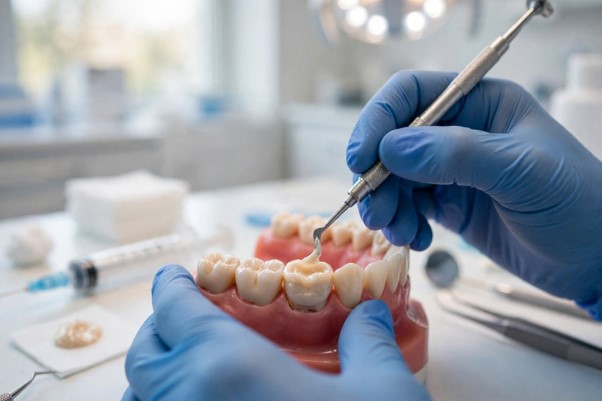
Composite bonding and white fillings both use tooth-coloured composite resin, making them popular choices for restoring or improving the appearance of teeth. Because they use similar materials, it is easy to assume they are the same treatment. However, their purpose, application, and the problems they address can be different.
Understanding composite bonding vs white fillings can help you decide which option to discuss with your dentist, whether you want to repair a damaged tooth or improve the appearance of your smile.
What Is a White Filling?
A white filling is a tooth-coloured restoration used to repair a tooth damaged by decay or minor structural damage. The dentist removes the affected tissue when necessary, prepares the area, and places composite material to restore the tooth’s shape and function.
Unlike traditional silver-coloured amalgam fillings, composite fillings blend with the natural tooth, making them particularly useful for visible teeth.
When Are White Fillings Used?
White fillings are commonly recommended for:
- Repairing cavities caused by tooth decay.
- Replacing worn or damaged fillings in suitable cases.
- Restoring minor chips or areas of tooth damage.
- Rebuilding parts of a tooth affected by decay.
The primary purpose is to restore the tooth’s health, strength, and function while maintaining a natural appearance.
What Is Composite Bonding?
Composite bonding is a cosmetic or restorative technique in which tooth-coloured resin is applied and shaped directly onto a tooth. The material is bonded to the tooth surface and hardened using a special curing light.
It is often used to improve the appearance of teeth without removing significant amounts of natural tooth structure.
When Is Composite Bonding Used?
Composite bonding may be suitable for:
- Repairing small chips and worn edges.
- Improving the shape or length of selected teeth.
- Closing certain small gaps between teeth.
- Masking some minor discolouration.
- Improving uneven tooth edges for a more balanced smile.
If you are considering this treatment, explore white fillings and composite bonding to learn more about the available options.
Composite Bonding vs White Fillings: What Is the Difference?
Although both treatments may use composite resin, the main difference is their intended purpose.
A white filling primarily repairs damage caused by decay or structural deterioration. Composite bonding often focuses on improving tooth appearance, although it can also restore minor damage.
The preparation and placement techniques may overlap. For example, composite resin can be used to repair a chipped tooth for both functional and cosmetic reasons. Your dentist will determine the appropriate approach based on the condition of the tooth.
Which Treatment Is Better for Chipped Front Teeth?
Both treatments may be suitable for repairing chipped front teeth, depending on the extent and cause of the damage.
A small chip may be repaired with composite resin shaped to match the surrounding tooth. If the damage is associated with decay, the dentist will also need to treat the affected area. Larger fractures may require a different restoration, such as a crown, depending on how much healthy tooth structure remains.
Before recommending treatment, your dentist may examine the tooth and take X-rays if clinically necessary. This helps identify damage that may not be visible on the surface.
How Long Do Composite Bonding and White Fillings Last?
Neither treatment lasts forever. Their lifespan depends on the size and location of the restoration, biting forces, oral hygiene, and habits such as nail-biting or chewing hard objects.
Composite bonding may stain, chip, or wear over time and sometimes requires polishing, repair, or replacement. White fillings can also wear or become damaged, particularly when exposed to heavy biting forces.
Regular dental check-ups, good oral hygiene, and avoiding habits that place excessive pressure on teeth can help maintain both types of restoration.
Are Composite Bonding and White Fillings Suitable for Everyone?
Not always. Active tooth decay, gum disease, extensive damage, or an unsuitable bite may need to be addressed before treatment. The colour of the surrounding teeth can also affect how closely the composite matches your smile.
If you are interested in improving several aspects of your smile, cosmetic dentistry treatments may provide additional options. Depending on your needs, your dentist may also discuss veneers or other restorative treatments rather than bonding alone.
Frequently Asked Questions
Is composite bonding the same as a white filling?
They often use similar composite resin, but their purpose can differ. White fillings mainly restore teeth affected by decay or damage, while composite bonding is frequently used to improve tooth shape and appearance.
Can composite bonding fix a chipped front tooth?
Yes, bonding can repair many minor chips in front teeth. Larger fractures or damage affecting the inner part of a tooth may require a different treatment after assessment.
Does composite bonding damage natural teeth?
Composite bonding is generally conservative and often requires little or no removal of healthy tooth structure. However, the amount of preparation depends on the individual tooth and the desired result.
Can white fillings stain over time?
Yes. Composite materials may discolour over time, particularly with frequent exposure to staining foods and drinks. Good oral hygiene and regular dental reviews can help maintain their appearance.
Choosing the Right Treatment for Your Teeth
Composite bonding and white fillings can both provide natural-looking results, but the right option depends on whether your tooth needs restorative treatment, cosmetic improvement, or both. A dental examination can help identify the cause of the problem and determine the most suitable approach.
Discuss your concerns with your dentist to understand the expected results, maintenance requirements, and alternatives before deciding on treatment.